Are You A Vanguard? Applications Now Open
This is your first of three free stories this month. Become a free or sustaining member to read unlimited articles, webinars and ebooks.
Become A MemberThis year’s class of MacArthur ‘genius grant’ recipients includes Dr. Jeffrey Brenner, who designed a way to provide health care using data to find, track and more effectively serve a city’s poorest and sickest residents. In 2012, our writer Jake Blumgart spent months reporting on the groundbreaking work Brenner and his colleagues are doing to improve the health care outcomes of the urban poor in New Jersey cities. To honor Wednesday’s announcement of Brenner’s award, we’ve taken down the paywall on the story.Please share.
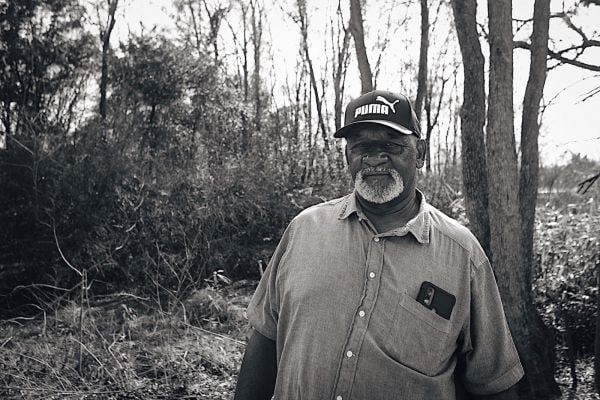
Driving around Trenton with Dr. Gregory Williams, you get the impression he knows pretty much every one of the city’s nearly 85,000 residents. Over the course of my day with him, Williams greeted almost a dozen people, government employees and homeless alike, from the window of his car or strolling down the street. It’s a good thing, too. Being in touch is pretty much his job.
Williams is a community organizer for the Trenton Health Team, a non-profit collaborative that is trying, one relationship at a time, to transform the way health care is delivered in New Jersey’s struggling capital. Allied with the Trenton Department of Public Health and health care providers, including two hospitals and the city’s lone federally qualified health center, the team’s work is part of a wave of urban programs that share a mission of remaking the way the way Americans, especially the impoverished, receive health care.
Williams is tall and wears a neatly trimmed salt-and-pepper beard. He speaks with quiet determination about his drive to keep the low-income people he works with out of the hospital.
“Much of what I do now is really just see the walking dead,” said Williams, who moved to Trenton in 2007 with a fresh degree in Urban Ministry from the New Brunswick Theological Seminary, after spending decades in corporate America. “People who are just one diagnosis away from dropping out with high blood pressure, and stroke, and diabetes, and cancer.”
Like many New Jersey cities, Trenton is a vision of unchecked mid-20th century urban decline. It never underwent the oft-hailed revitalization experienced in cities like New York, Philadelphia and Chicago. Walk through the state capitol’s downtown and see check-cashing joints and grimy Chinese takeouts across the street from City Hall. Boarded-up storefronts sit cattycorner to the state’s Department of Environmental Protection. There are few grocery stores within the city’s 7.7 square miles. Trenton’s rates for every type of chronic illness trump the average, with 16 percent of the population suffering from diabetes and 31 percent from hypertension. Nearly 40 percent of the population is obese.
The health crisis is not hard to see at the Kingsbury apartment towers, a public housing development overlooking the Delaware River. The two high rises, which are open to low- and moderate-income people 55 and older, stand between the state Department of Health, the Hughes Justice Complex and the venerable Sacred Heart Church. While these symbols of health, faith and justice loom in the background, the many elderly and low-income Kingsbury residents, who are predominantly African American (Trenton itself is 52 percent black) don’t enjoy easy access to fresh food. Liquor stores and overpriced convenience shops are accessible by foot. Fresh produce, not so much.
“I will write you a script [for a mammography] if you don’t have primary care. I’m due for one, too. I’ll go with you.”
On a recent weekday afternoon, a group of about a dozen Kingsbury residents met in one of the building’s common areas. They were there to discuss breast cancer with nurse practitioner Peg Nucero, a member of the Trenton Health Team (THT). The group comprised mostly middle-aged and elderly women, although a young man hovered around the edges quietly observing the presentation. (There are low-rise apartment buildings in the shadow of Kingsbury, which house many young families.) The gathering, dubbed the “Kingsbury Health Team,” is part of a series of weekly meetings held by THT. Residents chose the topics, which range from domestic abuse to diabetes management. The most dedicated members of the team participate in “train-the-trainer sessions,” run by Nucero, which eventually will enable them to educate their fellow residents.
In this particular meeting, Nucero, her blonde hair in a conservative but stylish bob, gave a casually forthright interactive presentation on the dangers, risk factors and warning signs of breast cancer. She also stressed the importance of annual mammograms. “I will write you a script [for a mammography] if you don’t have primary care,” she said. “I’m due for one, too. I’ll go with you.”
Nucero took questions during and after the presentation, not limiting discussion to the topic at hand. One woman asked about blood pressure medications and was advised on best practices (“always take it with food”). Afterwards Nucero told me that the advisory elements of the meetings are crucial. Many diabetic residents, for example, didn’t know how to use a glucometer prior to their engagement with THT, despite frequent ER visits for complications. “How do you expect people to care for themselves without basic training?” Nucero said.
At its heart, THT serves as a mediator between Kingsbury residents and the city’s byzantine network of social and health services bureaucracies. Residents have Nucero’s cell phone number if they have questions about prescriptions, diet or other related health care issues.
The Trenton Health Team is indebted to Dr. Jeffrey Brenner, a Camden-based physician. About 10 years ago Brenner began tracking the areas of Camden that had the highest health care costs, largely because residents weren’t being properly treated for chronic illnesses. He realized that a huge amount of money and a large number of lives could be saved if the low-income people who ring up the highest bills in public emergency rooms received health care from people like Nucero, rather than the rushed ER doctors who often end up treating them. With that a-ha! moment behind him, Brenner founded the Camden Coalition of Health Care Providers.
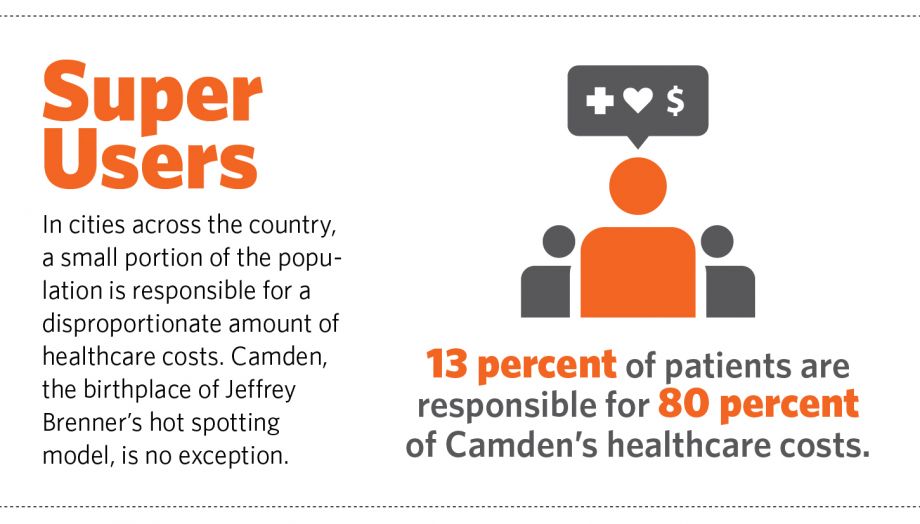
The organization works by coordinating with the city’s health care stakeholders to pool data and identify the 13 percent of Camden’s population responsible for 80 percent of the city’s health care costs. Once these residents are identified, the coalition coordinates their care across institutions and works with them, sometimes through home visits, to find out why they their health continues to fail (resulting in expensive and unpleasant repeat hospitalizations). Called “hot spotting,” this system is essentially a patient-centered form of health care that uses data to better connect with people and provide better preventative care. It focuses on people who, in the past, have fallen through the cracks of the health care system — until that system has to receive them in an ambulance.
With a staff of 43 and a limited budget supported by federal grants, the non-profit has achieved spectacular successes in its titular city, boasting a 56 percent decline in targeted patients hospital bills.
The work being done in Camden and Trenton is so successful because health care providers are working together to treat the whole patient and to head off medical conditions before they reach a crisis point. This contrasts sharply with the standard way of doing things in the nation’s current health care system. Under the historic norm, providers are paid for the number of procedures performed, not by health outcomes. Providers remain walled off from competitors, fearful of sharing what amounts to their business data. It’s a strategy that works fine for amassing profit and treating injuries, but not so great for treating chronic illness or the elderly.
“American health care is like an incredible orchestra with the most talented musicians, but we haven’t agreed to play in the same key or in the same rhythm and we are being paid per note,” Brenner said.
The coalition’s achievements in Camden haven’t escaped notice. This year, the Obama administration awarded the non-profit $17.2 million in grants to scale up the program to treat all of Camden and replicate it in four other cities: San Diego, Allentown, Pa., Aurora, Colo. and Kansas City, Mo. (It also received national attention when Atul Gawande profiled its work in the New Yorker in January 2011.)
Ezekiel Emanuel, President Obama’s former health care policy advisor, thinks it was only a matter of time until other cities caught onto Camden’s strategy. “Ten percent of the population consumes almost 67 percent of the health care costs,” said Emanuel, a vice provost at the University of Pennsylvania and brother to Rahm Emanuel, Obama’s former chief of staff and mayor of Chicago.
Brenner’s approach, he said, “is the kind of hot spotting we need: Identifying people likely to [incur] high costs and getting them healthier.”’
“Not everyone is going to use the exact methods used in Camden,” he added, “but that doesn’t mean people aren’t using predictive modeling to identify people likely to have a high rate of hospitalization or health care utilization.”
And if Brenner’s experiment to transform the way low-income communities receive health care succeeds, it could become a national model for cities seeking to improve the health of residents while, potentially, lowering health care costs across the board.
Lady B. is a homeless and mentally ill Trenton woman who wound up in the emergency room a stunning 465 times in 2010. The Trenton Health Team began working with her in 2011. After looking at her ailments holistically, they helped Lady B. with the bewildering social services system, finding her housing and outpatient mental and behavioral health treatment. That year, she visited the ER 12 times.
“Those hospital beds don’t need to be filled,” said Williams, THT’s community organizer. “We need to be on the street, a whole new model in terms of deploying health care services to the people. We need to meet them where they’re at.”
That means forming close relationships and empowering patients to help themselves and others in their community.
Kingsbury resident Mr. S., for instance, has “a lot of physical ailments,” including diabetes and congestive heart failure. He got involved with the Kingsbury Health Team in 2011 and helped recruit other residents to attend the meetings and meet with community organizers. He described himself, when he first got involved with THT, as “overmedicated,” with about 32 prescriptions. The team got him down to seven or eight medications and set him up with a home aide and a therapist. While Mr. S. is still very sick, he has nothing but praise for the Trenton Health Team’s work.
“A lot of elderly people don’t even come out of their homes, but this has made them more comfortable,” Mr. S. said in a recent interview. In the past year, he has become a leader with the Kingsbury Health Team. “I hear that from people every day in the building, can you call someone, who should I call?”
The Trenton non-profit has recorded successes.
Between July 1, 2011 and June 30, 2012, both Capital Health and St. Francis hospitals reduced ER visits by 61 percent and 30 percent, and inpatient stays by 43 percent and 70 percent respectively, according to THT. Capital Health reports a $1.8 million decrease in ER charges and a $1.8 million decrease in hospital charges for inpatient admissions. The 50 St. Francis patients who utilized the ER the most between July 2010 and December 2010 incurred $3.5 million in charges. But after THT went to work those same patients, between January and June 2012, they only incurred $946,000 in charges, according to sources at both institutions.
Patient wait times have also been reduced. All the hospitals report about a two-day wait, down from wait times of five weeks at the very least. Even more amazingly, St. Francis managed to improved patient provider continuity from 0 percent to 95 percent, ending an unfortunate norm of uncoordinated care. Each patient is assigned a team at the hospital, all of whom are familiar with their case history, the tests and prescriptions administered, and the particulars of their situation. Both patients and providers have reported greater satisfaction with the system.
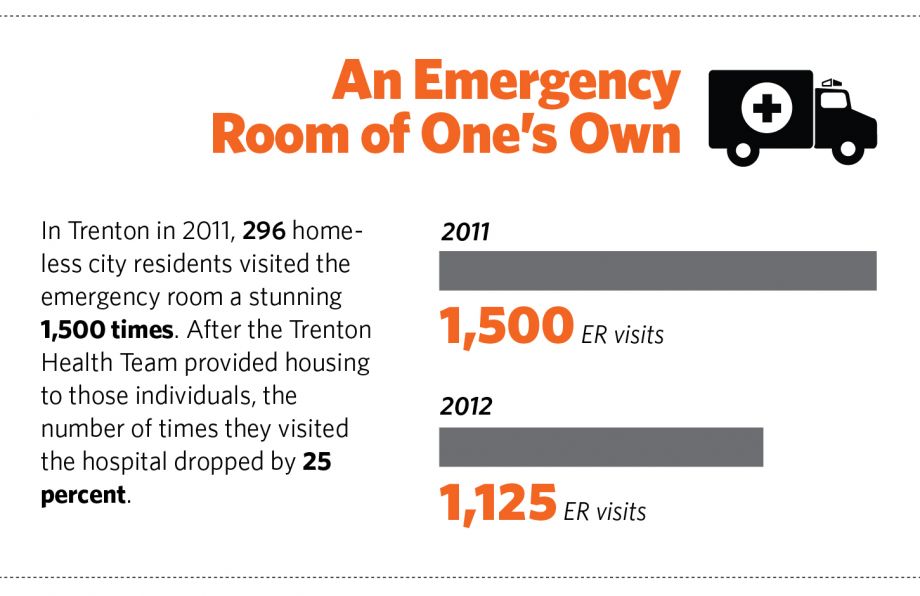
The other major hotspot is Trenton’s large homeless population, numbered at more than 1,000 individuals. Williams’ work with this population is just beginning, but THT is already starting to provide assistance for those struggling with the austerity-ravaged housing and health bureaucracies. In 2011, 296 of Trenton’s homeless visited the ER more than 1,500 times. But St. Francis tracked five of their homeless patients and found that if they were provided with housing services, their ER visits were reduced by 25 percent and their inpatient visits and charges by 100 percent.

Trenton turned to hot spotting in 2006 when one of its two hospitals, Capital Health, decided to decamp for the suburbs. The mayor at the time, Douglas Palmer, vigorously protested the move. After some political tussling, Capital Health agreed to pay for a consultant to diagnose the city’s ills. The results showed a disjointed health care system providing suboptimal outcomes at great expense. Duplicated tests, specialty care with no follow-through, lengthy hospital stays, and unnecessary and unexplained prescriptions afflict many Americans, but Trenton’s numbers were even worse.
Emergency room utilization in Trenton was 54 percent higher than the national average, due to a dearth of health coverage and access to primary care. The city’s federally qualified health center had an appointment wait time of 37 days. The hospitals could be even worse: St. Francis Medical Center, the city’s other hospital, had wait times as long as 74 days. In a city where one out of three children live in poverty and nearly a quarter of the population does not have private health care, the inefficiencies came at enormous public cost.
Capital did move its primary operation to Hopewell, N.J., a township immediately north of Trenton. But thanks to Palmer’s intervention, that wasn’t the end of the story. Capital maintains clinics and an emergency department at its old location, and just invested a further $100 million to expand its infrastructure around their Regional Medical Center, which is still in town. Just as importantly, Capital teamed up with major Trenton health care players — the Department of Public Health, St Francis hospital and Henry J. Austin community health center — to systemically address the issues raised by the consultant’s study. By 2010, these organizations had come together under the aegis of the Trenton Health Team. It was an unlikely feat. As is often the case, these health care institutions were more used to jockeying for position than collaborating.
“They were all heavy competitors in the health care market space,” said Dr. Ruth Perry, executive director (and currently sole employee) of THT. “How do you shift from competition to collaboration?”
The answer seems to be necessity. One hospital was leaving town. Another was strained to a point of near dysfunction. Trenton could not afford the status quo, and could not take a gamble on losing two major anchors for economic and social stability.
“Everybody in government has seen a big downturn in the number of dollars available to provide public health services and access to health care,” said Jim Brownlee, the city’s health officer and director of health and human services. “This is the first time in my career as a public health practitioner that I have access, one-on-one access, to our two hospitals and our federally qualified health center to work together to restore services we were not providing.”
When Hurricane Katrina struck New Orleans, its venerable public hospital, Charity Hospital, was damaged. It closed and, due to a confluence of political and economic factors, never reopened — a huge blow to the city’s already fragile health care network. (A $1.2 billion mega-complex catering to privately insured patients replaced Charity.) In 2004, the year before the storm, Charity served 100,000 patients. Where would they all go?
With Charity down, a cadre of doctors who hadn’t fled the city, including Dr. Karen DeSalvo, now health commissioner for New Orleans, quickly began constructing a vast network of neighborhood clinics in churches, dorms, grocery stores — wherever there was space. On a tight budget and in the ruins of the old safety-net health system, DeSalvo and her colleagues worked with a $100 million federal grant that paid based on the quality of care, not the number of tests performed.
To meet this standard, New Orleans neighborhood clinics started using a model that should sound familiar. The care was comprehensive and patient-oriented. Clinics were staffed with case managers, social workers and mental care professionals, in addition to the standard medical staff. When a patient missed an appointment, providers followed up. Emergency room visits among the Medicaid population declined, while the numbers of uninsured utilizing the ER flattened and their hospital stays declined.
The grant ran out in 2010 and the New Orleans clinics now rely wholly on more traditional payment mechanisms, including Medicaid, which still pay on the fee-for-service model. “When we moved care to neighborhoods and started paying for it in a population capitation model, rewarding quality, rewarding access to care, allowing for there to be team-based care reflective of the people being served — patients reported better satisfaction, [and it was] inexpensive,” DeSalvo said, speaking from her office in New Orleans City Hall. “But as soon as we moved started to pay for it under fee-for-service, the staffing models at the clinics began to change.”
DeSalvo said she hopes to see the state’s Medicaid program tailored to accommodate the original model. The state’s secretary of health is in favor, she said, but doesn’t have the staff to export the New Orleans model to all of Louisiana. In the city, DeSalvo went on, “there is no one who disagrees with” the idea of investing in collaborative, comprehensive care. But assuming the Affordable Care Act rolls out unhindered, Medicaid is about to start insuring another 16 to 18 million people nationally and about 600,000 in Louisiana, all paid for under the prevailing fee-for-service model.
“We have built demonstrations and models all over this country, we know it’s doable on the ground,” DeSalvo said. “What we haven’t yet acknowledged is that we have got to dismantle legacy systems.”
“Ten percent of the population consumes almost 67 percent of the healthcare costs,” said Emanuel, a vice provost at the University of Pennsylvania and big brother to Rahm Emanuel, President Obama’s former chief of staff and mayor of Chicago.
That’s what Trenton and Camden have done, but both cities had the benefit of political will in the first instance and an immensely entrepreneurial individual in he second. Additionally, both were operating in low-competition environments with large uninsured populations. It is still unclear whether a city like Philadelphia or Boston, with many powerful stakeholders competing over highly profitable patients, can muster the wherewithal to push for changes away from the fee-for-service model that has been these institutions’ bread and butter for so long.
“The facilities that are dong very well in fee-for-service care are tremendously influential, economically and politically,” said Harold Pollack, a professor at the University of Chicago School of Social Service Administration. He points to the development of new medical centers, like the $1.2 billion complex under development in New Orleans, as evidence of Big Medicine’s reluctance to give up the old approach, even as needs are going unmet.
Yet Pollack and others agree that reluctance aside, change is coming.
“Everyone on the hospital side that I talk to understands that the era of fee-for-service medicine is going to grind to a close,” he said. “That’s commonly understood. It’s too pathological to survive.”
How quickly hospitals are able to make the transition depends on the fate of the Affordable Care Act, which Republicans continue to fiercely oppose. Beyond its promise of near-universal coverage, the ACA contains many provisions that could help hospital-addicted cities move toward population health models. Brenner does not believe the incentives in the act are strong enough to induce the magnitude of change required, but even he said that the new law has spurred more health care innovation in the last two years than he has seen in the previous two decades.
One especially helpful reform hidden away in the ACA’s depths is the change to hospital reimbursements for Medicare, the largest insurance provider in the country and resultantly an excellent trendsetter. Starting in October, thousands of hospitals saw their reimbursements reduced if their Medicare patients were readmitted within a month of release. While some argue that patient behavior beyond the hospital can’t be controlled, the models in New Orleans, Trenton and Camden show that help can be offered, and that patients will often accept.
When Gregory Williams is out on the Trenton streets, he talks with a group of young men, mostly in their 20s and 30s, who are staying at a shelter but badly want housing of their own (particularly galling is the shelter’s rule that those who want to stay the night must show up by 4pm in warmer parts of the year, which makes getting work awfully tough). Williams tells them he’ll be back soon to discuss options.
“That is a big part of what we do with the Trenton Health Team,” said Brownlee. “We [meet with] individuals who are homeless and find the right types of support services for them and get them into housing. There is a synergy that allows us all to take bigger steps as a group than if we were doing it by ourselves.”
Another revolutionary aspect of THT’s work is the forthcoming Health Information Exchange, a universally accessible database of patient records. (It is not mandatory and patients can choose to opt out.) The database will allow providers across the city to see a patient’s medical history: Tests received, medicines prescribed, lab results. This will prevent expensive and unhelpful duplication of services and eliminate the patient’s burden of recalling complex pharmaceutical names or the exact exams they’ve received. A doctor or ER nurse will be able to access their detailed medical history with a few keystrokes. The system is projected to be operational by the end of 2012.
The patient-oriented, collaborative care being spearheaded by organizations like THT, the Camden Coalition and similar projects across the country is very similar to the practices of the universal health care systems of other industrialized democracies. France, for example, provides its citizens with a health care card, eliminating expensive paperwork and, like Trenton’s forthcoming Health Information Exchange, allowing providers to immediately access an individual’s detailed medical history. Britain’s National Health Service rewards doctors based on outcomes, akin to the ACO model that Trenton and Camden hope to utilize, which would allow health care providers to keep a portion of the money they save by keeping their patients healthier and out of the hospital. NHS also operates a free 24-hour phone service — a nationwide version of giving Nucero’s number to Kingsbury residents — that patients can call any time of the day or night to receive a consultation, which is cheaper than a doctor visit.
Brenner and the Camden Coalition have a Health Information Exchange up and running, but they very purposefully drew a line around the city of Camden. Expanding it to the whole region would have meant getting embroiled in the greater political complexity found across the Delaware River in Philadelphia. There the economy very much relies on the “eds and meds” model of economic development, where hospitals and research complexes create the large-scale, relatively stable employment that manufacturing used to provide. With its nimble infrastructure and bias against hospital stays, hot spotting could be seen as a tacit threat to these institutions.
“Philadelphia’s entire economic model is built on cutting, scanning, zapping and hospitalizing Philadelphia residents,” Brenner said. “Much of the city’s economic renaissance has been based on an expansion of the medical industrial complex, the expansion of hospitals. I don’t know how much traction the idea of better care at lower costs with fewer hospitalizations is going to get.”
This isn’t unique to Philly. Most American cities that lost their manufacturing bases long ago depend on hospitals and universities to anchor their economies. These hospitals operate along the same lines as a hotel or an airline: Fill the beds. Every time a patient checks in, that’s another pot of cash, no matter if they were just in the hospital the other week and the care failed so badly that they had to, well, be hospitalized again. It’s called Roemer’s Law: “A hospital bed built is a hospital bed filled.” Sure enough, close to 20 percent of American seniors are back in the hospital within 30 days of being released. Not all of these readmissions are avoidable, but many are. Brenner estimated that if the rewards were switched and preventive, patient-based care became the norm, the country would need a third fewer hospitals.
While preventative, population-based strategies are spreading to other cities, they are often met with skepticism from health care stakeholders. More than 50 miles to the north of Trenton, the Greater Newark Health Care Coalition is performing similar work, but have not progressed as far as their sister organizations in southern New Jersey. Brenner attributed the halting progress to the greater diversity of health care stakeholders in a city that is over three times the size of either Camden or Trenton. The San Diego Organizing Project, too, has been building support for such an intervention within chronically ill populations. Community partners, including local clinics and faith groups, have rallied to the cause. But, as in Newark, hospitals have expressed serious reservations about sharing admissions and cost data.
Hannah Gravette, a community organizer with the project, is confident that provisions within the Affordable Care Act, and the desire to lessen emergency room utilization by chronically ill people, will bring them around soon. “They have [been] open to meeting with us, and thinking with us about solutions,” she said. “But they are very afraid to expose a lot of the data that we want. It has been very difficult to track admission, and even harder to get an idea of the charges, cost and receipts of admissions.”
“If the healthcare system gets more efficient, what we’re talking about is slowing the rate of growth,” he said. “Not cutting healthcare, rearranging it.”
Due to their economic might, hospitals are also very hard to reform from without. In a 2002 survey of state officials, hospitals and nursing homes were considered the most powerful political actors in 21 states and the second most influential in a further 18 states.
Philadelphia’s Department of Public Health, for instance, is very intrigued by Brenner’s work and has considered attempting to apply it to highly specific populations — like the homeless — which would allow them to hot spot without asking the city’s health care stakeholders to pool data or work collaboratively. But getting the project off the ground has been an uphill battle.
“The city in Philadelphia would like it to happen,” Dr. Donald Schwarz, Philadelphia’s health commissioner and deputy mayor for health and opportunity, said in an interview last spring. “We are trying to facilitate people moving forward, but the complexity in Camden is somewhat less, as you might imagine, than the complexity in Philadelphia.”
That doesn’t surprise Brenner. “Generally speaking, bigger communities have a harder time [making the transition THT is attempting] because the stakeholders are harder to wrestle to the ground,” he said. “There is less commonality of purpose, the institutions have a much harder time seeing shared interest in working together.”
But reforming care delivery to focus on patient outcomes and quality primary care wouldn’t necessarily spell doom for cities that depend on “eds and meds.” As Gawande pointed out in the New Yorker article, Denmark refocused its health care system on preventive care and less on expensive inpatient stays. The number of hospitals there has fallen from more than 150, in the late 1980s, to 71 in 2010 and, according to Gawande, will dip below 40 in the near future. But has Denmark seen a dramatic decline in overall health care costs and employment? As of 2010, not really. While the number of acute care hospital beds in Denmark is below the OECD average, the number of physicians and nurses is higher than average. Denmark is solidly middle of the pack in terms of health care expenditures as a share of GDP. According to Emanuel, a similar pattern can be expected as the American system rationalizes.
“What you are going to be doing is taking people who are doing inpatient care, and they are going to be doing outpatient care instead,” Emanuel said. “That doesn’t mean a net decrease in jobs. If you actually end up controlling costs, and premiums stay down, people get more wages and they can go spend that on other things and that will stimulate the economy too.”
“If the health care system gets more efficient, what we’re talking about is slowing the rate of growth,” he said. “Not cutting health care, rearranging it.”
Our features are made possible with generous support from The Ford Foundation.

Greg Pizzoli is an author, illustrator and screenprinter from Philadelphia. He has been recognized for his editorial and children’s illustrations by Communication Arts, The Society of Children’s Book Writers and Illustrators and 3×3 magazine. His first children’s book will be released by Disney*Hyperion in the summer of 2013.

Next City is a nonprofit news organization that believes journalists have the power to amplify solutions and spread workable ideas from one city to the next city. Our mission is to inspire greater economic, environmental, and social justice in cities.
Learn more about us →

20th Anniversary Solutions of the Year magazine








 Never Miss A StoryDownload our app